Why public sector is ditching Microsoft for openDesk

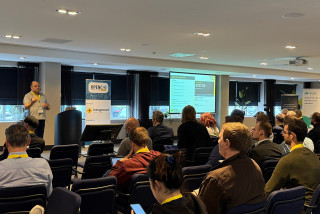
At our latest OPEN for Public Sector event in Brussels, two speakers made the case for openDesk more powerfully than any product sheet ever could. One built it. One uses it every day.
We were on our knees begging for a 1% discount.
That's not a quote from a frustrated startup. That's a senior IT leader at a Belgian federal institution describing what it feels like to negotiate a €200 million annual Microsoft contract when you have no alternative to walk away to.
The story he told was painfully familiar to anyone in public sector IT. Microsoft sits down on one side of the table. The government sits on the other. Microsoft names a number. The government asks how. Microsoft says: figure it out; E3, E5, mix and match, but the total stays the same.
If you have no alternative, you have no leverage.
That's one of the reasons his organisation started piloting openDesk last year. Alongside it: a genuine belief in open standards, the principle that citizens shouldn't need a Microsoft licence to interact with their government, and the conviction that community-driven open source is structurally more trustworthy than a single commercial vendor. The negotiating argument just happens to be the easiest one to explain to a minister.
The problem predates Trump
It's tempting to frame the current wave of digital sovereignty interest as a reaction to geopolitical events. But the federal speaker pushed back on that narrative directly.
"Trump is using instruments that already existed. The dependency was always there. Most of my colleagues are hoping that once he's gone, everything goes back to normal. I don't think so."
He pointed to a number that stopped the room: €264 billion. That's what Europe pays American hyperscalers every year; money leaving the continent, not circulating in the local economy. The European Commission's response? A €2 billion investment in open source. A start, but a reminder of just how lopsided the equation is.
The sovereignty concern isn't just about price. It's about control. His organisation provides IT services to Belgian federal institutions with high security requirements; institutions that simply cannot put their data in a commercial cloud. With Microsoft 365, that's increasingly not a choice anymore.
And then there's the double standard problem. When you use Microsoft, no one asks questions. When you propose an alternative, suddenly you need a data protection assessment, a security review, full compliance documentation. "That's not neutrality," he said. "That's a structural bias baked into how public administrations think about IT risk."

What openDesk actually is
Dieter from Kangaroot gave the technical picture. OpenDesk isn't a new platform, it's a curated, integrated stack of mature open source components:
- Open-Xchange for email & calendar
- Nextcloud for file management
- Cryptpad for collaborative document editing
- Element for chat
- OpenProject for project management
Each component has its own active community and years of production use behind it. What openDesk adds is the integration layer: one login, one portal & components that talk to each other. Save an email attachment directly to Nextcloud. Start a chat from inside a project. It works the way an integrated suite should.
Kangaroot offers this as a managed service: handling installation, configuration, updates, security, monitoring, & support. All deployed on Belgian sovereign cloud infrastructure: on-premise, or via providers like Smals or Exoscale. Pricing is per user per month, and significantly lower than Microsoft 365.
Open source, sovereign, secure,
Dieter summarised. "That's the core message."

It was up & running in days
The federal speaker had a revealing anecdote about what it's actually like to deploy openDesk.
He called Kangaroot. He said: the Germans built this, I know you have open source experience, can you install it for me? A few days later, it was running.
With a traditional service provider, you ask a question and they say it takes months. Kangaroot installed it in days. I was genuinely surprised.
The POC is now running with 20–30 users from multiple organisations. He uses it himself every day. His verdict: "Is it better than Microsoft? No. It's different. But the difference is about the same as switching from Windows 95 to Windows 2000; you spend a week finding where things moved, and then you get on with your work."
He's already had meetings where Teams failed and openDesk's video conferencing stepped in. "A few minutes to set up a new meeting, send the invite, and we were on a call. It just worked."
The honest challenges
Neither speaker oversold it. The migration path from Microsoft 365 is real work, especially SharePoint to Nextcloud, where 20 years of workflows, document templates, and business processes don't port automatically. Internal knowledge gaps need to be filled. Backup isn't built in out of the box and needs to be architected.
Dieter was direct:
Migrating from Microsoft 365 is not trivial. It requires careful planning.
But Kangaroot has developed a migration methodology and the managed service model means organisations don't have to figure it out alone.
On identity management: OpenDesk integrates with existing Active Directory environments, supports identity federation & can be configured to serve different user groups different portal views, including role-based landing pages, news feeds and automated workflows.
On AI: Kangaroot is already running an on-premise AI environment based on Mistral, with openDesk integration planned. For public sector organisations that are currently blocking AI tools entirely and there are many local AI on sovereign infrastructure may be the only path forward.
The leverage argument
The federal speaker closed with the point that resonated most in the room.
Installing openDesk isn't just about replacing Microsoft.
It's about having something real to put on the table in the next negotiation. "Once you have users actually on the platform, you can walk into that room and say: lower your prices, or we move. That's a completely different conversation."
It's the same logic that led his organisation to run multiple vendors in their data centres. Not because any single one is perfect; but because concentration is risk & dependency is weakness.
If you don't have an alternative, you're not a customer. You're a hostage.

Getting started
Kangaroot offers Managed openDesk for Belgian & Dutch public sector organisations, deployed on sovereign infrastructure and supported end-to-end.
Interested in a demo or a conversation about what a pilot could look like for your organisation?
Related news items