
What is openDesk?
Most organisations are still locked into proprietary collaboration suites: limited grip on their own data, privacy questions they can't fully answer & one vendor holding all the leverage.
openDesk takes a different route. Rather than building yet another platform, it bundles proven open source tools into one self-hosted digital workplace; a selection of best-in-class open tools that together create an alternative for Microsoft 365 or Google Workspace.
| Open-Xchange | Email & calendar |
| Nextcloud | File storage & document management |
| Collabora Online | Office suite in the browser |
| Jitsi | Video conferencing |
| Element / Matrix | Secure team chat & channels |
| OpenProject | Project management & issue tracking |
| Keycloak | Identity provider & SSO |
All actively maintained & bundled with opendesk including monthly (feature &security) releases.
None of these tools are new or untested; each comes with its own community & years of real-world use behind it. What openDesk adds is the glue between them: a single login, one portal & components built to talk to each other. An email attachment lands straight in Nextcloud. A project spins up its own chat on the spot. That's what an integrated suite is supposed to feel like.
What digital sovereignty actually means
For most organisations, sovereignty still gets reduced to "keep it in Europe". That's part of it, but not the whole picture.
Real sovereignty means your data stays under your own jurisdiction, not just at a European address; your infrastructure choices stay yours, whether that's on-premise or a sovereign EU cloud; and your software doesn't tie you to one vendor's roadmap or pricing.
openDesk is built around exactly that. Every component is open source, so you can inspect it, adapt it & walk away from any single supplier without losing your data or your workflows.

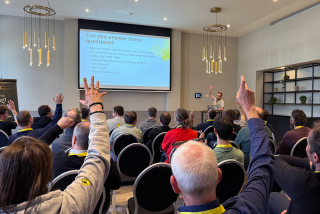
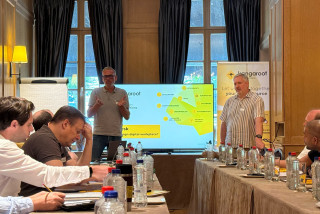
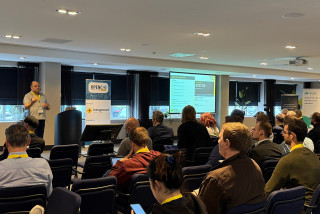
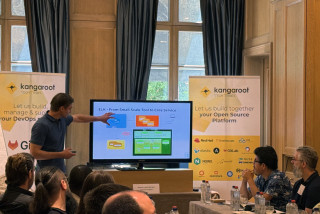
It was up & running in days
A proof of concept at a federal Belgian institution
With a traditional service provider, you ask a question and they say it takes months. Kangaroot installed it in days. I was genuinely surprised.
The POC is now running with 20–30 users from multiple organisations. He uses it himself every day. His verdict: "Is it better than Microsoft? No. It's different. But the difference is about the same as switching from Windows 95 to Windows 2000; you spend a week finding where things moved, and then you get on with your work."

Managed openDesk
Kangaroot runs openDesk as a managed service: installation, configuration, updates, security, monitoring & support, all handled for you. Hosting sits on Belgian sovereign infrastructure, on-premise or through partners like Smals & Exoscale. You pay per user per month, at a rate well below what Microsoft 365 costs today.
Curious what a pilot could look like for your organisation?
Frequently Asked Questions
-
What is openDesk?
OpenDesk isn't a new platform; it's a curated set of proven open source tools; Nextcloud, Collabora, Element, OpenProject & more; bundled into one login & portal. It's already running in governments across Germany, France & the Netherlands.
-
Why are governments switching to openDesk?
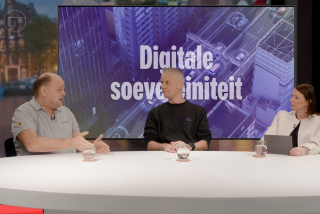
Digital sovereignty & data control are the main drivers. When the International Criminal Court lost access to its Microsoft-hosted email after US sanctions, it switched to openDesk; not as a statement, but out of necessity.
-
Is openDesk the same as MijnBureau?
Not exactly, but the two are closely related. MijnBureau is the Dutch government's own initiative, developed under its "Beter Samen Werken" programme and built largely on the same open source building blocks as openDesk, alongside France's La Suite. Germany governs openDesk directly; MijnBureau runs under Dutch government control and is currently in pilot phase with a handful of municipalities.
If your organisation wants those same open, sovereign building blocks today, without waiting for the pilot phase to conclude, Managed openDesk from Kangaroot gets you there now.
Related news items